scrutiny.cloud: Open, transparent, end-user verifiable and LLM-ready security testing framework
Sunday 8 November 2026, 15:30–15:55 Live
Room A113
Track: Privacy and Security
Language: English 🇬🇧
Live stream A113 Rate this talkSecurity products are typically tested against a range of currently known weaknesses and good design practices. While a dedicated evaluation laboratory (e.g., a FIPS 140 or CC lab) will typically perform the testing with a high level of expertise and specialized equipment, such testing is typically done only once, does not publicly disclose all testing details, and is thus not independently replicable by the product end-user. Independent researchers offer vital alternative analysis, but their results are scattered across blogs and papers, hard to discover, and frequently vulnerable to censorship or removal.
This talk introduces the scrutiny.cloud project, aimed at solving the following problems:
- End-user verifiability (knowing what was tested, how, and ideally having the possibility to replicate it),
- Discoverability (how to find relevant testing information produced by others),
- Censorship problem (vendors refusing to disclose reported vulnerabilities),
- Spam/trust problem (inherently associated with permissionless systems), and
- Data interpretation problem (extracting actionable information from a diverse range of partial metadata data points).
The idea is to use existing open analysis tools (some provided by us, but not limited to those) to produce signed metadata from testing, then upload and share it via scrutiny.cloud, a thin metadata overlay built atop the open nostr protocol. The uploaded metadata can later be discovered and interpreted by humans and/or LLMs. As all metadata blobs are signed by their producers, filtering input information to include only trustworthy entities is already a native feature inherited from the nostr protocol.
Resources

Petr Svenda
Petr Švenda is a security researcher and teacher at Masaryk University, Czech Republic. His research interests revolve around applied cryptography and the analysis of cryptographic hardware, both from its usage as well as attack direction. He first touched the side-channel analysis of cryptographic devices for the Czech National Cyber and Security Agency in 2002 and has kept his passion for cryptographic smartcards ever since. In 2017, he co-discovered and responsibly disclosed the RSA key generation flaw in Infineon cryptographic chips affecting 1-2 billion devices worldwide, including those used in Estonian eIDs (CVE-2017-15361, ROCA), Minerva ECDSA vulnerability in EAL4+ certified chips (CVE-2019-15809) or extraction of private key from Intel's fTPM implementation using value of only 9 signatures (CVE refused to be assigned by vendor). These experiences led him to further explore the problem of transparent replicable security testing and sensitive information sharing.
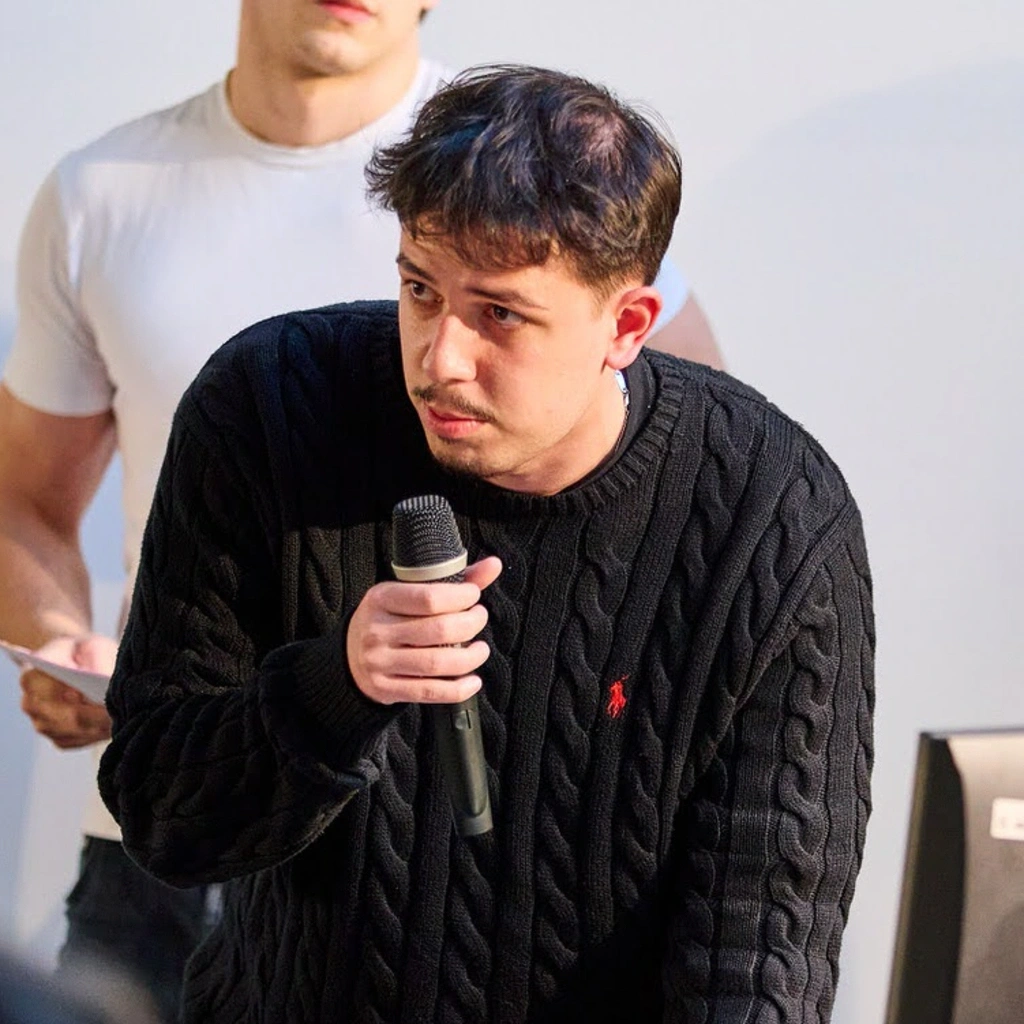
Ali Al-Sorehi
Ali Al-Sorehi is a cybersecurity student and researcher at Masaryk University, specializing in supply chain security. He leads the development of scrutiny-fabric, a decentralized protocol built on nostr for permissionless sharing and viewing of security-relevant metadata. His practical security research targets both traditional software and emerging technologies – from discovering vulnerabilities in decentralized ecosystems (such as RUSTSEC-2026-0224 in rust-nostr) to researching AI model vulnerabilities. He is also a research intern at Red Hat, where he explores AI Bill of Materials (AI-BOM) and white-box LLM fingerprinting to establish trust and provenance in AI ecosystems.